Ad operations
Campaign pacing and makegood register
Organization byline: Measurement Press editorial desk. This page does not list an individual author or reviewer. Read the editorial method and corrections policy.
About 12 min read
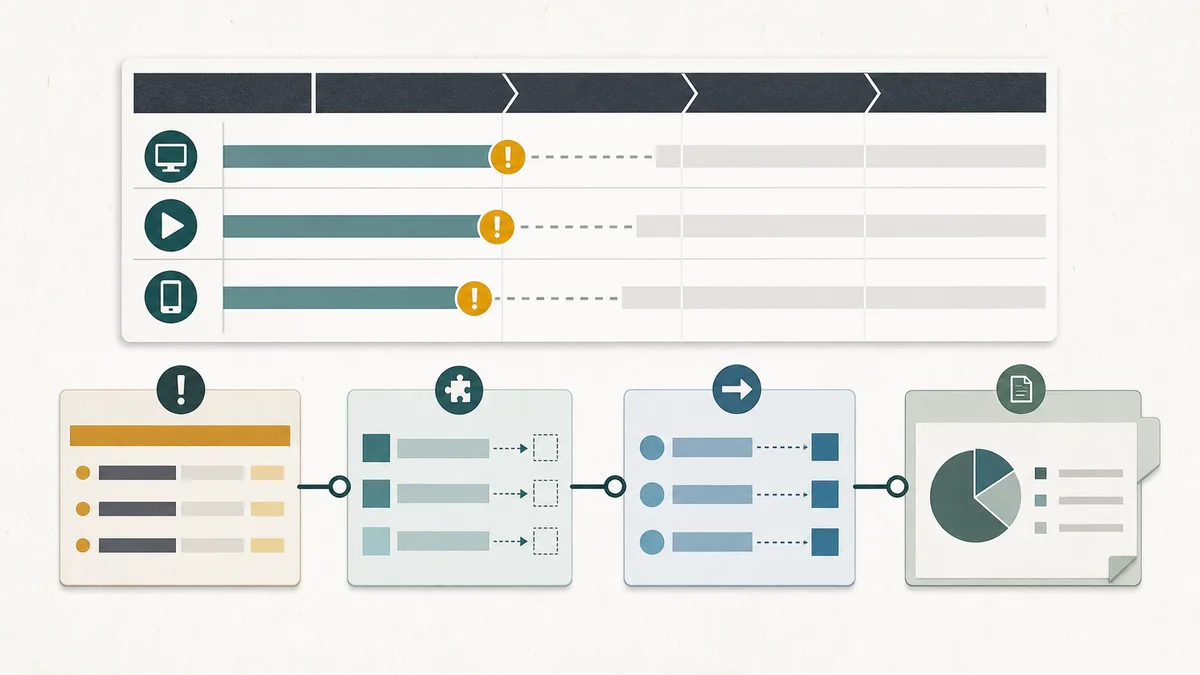
The campaign is 11 days from closeout. The dashboard says total delivery can still recover, but the desktop rail is behind, one mobile creative was approved late, and the proposed makegood would move impressions into a different article placement.
A pacing register is the shared record that keeps that situation readable. It shows the approved package, the delivery state, the cause of any shortfall, the buyer notice, the makegood path, and the final sentence allowed in the report.
Use this register for contextual display, direct sponsorship, and private marketplace packages after launch approval and before the final readout. It keeps delivery operations, buyer communication, and measurement language in one lane without turning underdelivery, overdelivery, or replacement inventory into a performance claim.
When to open the register
Open a pacing and makegood register as soon as a campaign has a signed package, approved creative, live placements, and a reporting field dictionary. The register should be short enough for weekly review and specific enough to reconcile with trafficking, analytics, invoice, and renewal records.
| Trigger | Record immediately | Why it matters later |
|---|---|---|
| Launch day | Campaign ID, package ID, deal key, planned dates, booked impressions, placement mix, device eligibility, and primary reporting owner. | Creates the baseline for pacing, delivery exceptions, and final report reconciliation. |
| Mid-flight pacing check | Booked, expected-to-date, delivered, viewable, blocked, paused, and remaining impressions by placement and device. | Separates normal delivery variance from an exception that needs buyer notice or makegood planning. |
| Creative or destination change | Creative ID, destination ID, change reason, approval owner, start time, and fields affected. | Prevents one total from pooling unlike messages, pages, or tracking states. |
| Placement exception | Placement ID, page group, device, size, ineligible reason, substitute inventory, and buyer approval status. | Shows whether replacement delivery stayed inside the purchased reader context. |
| Makegood proposal | Shortfall source, proposed replacement, date window, field impact, buyer notice, and strongest allowed readout language. | Keeps delivery repair separate from claims about campaign quality or lift. |
Pacing-to-makegood decision map
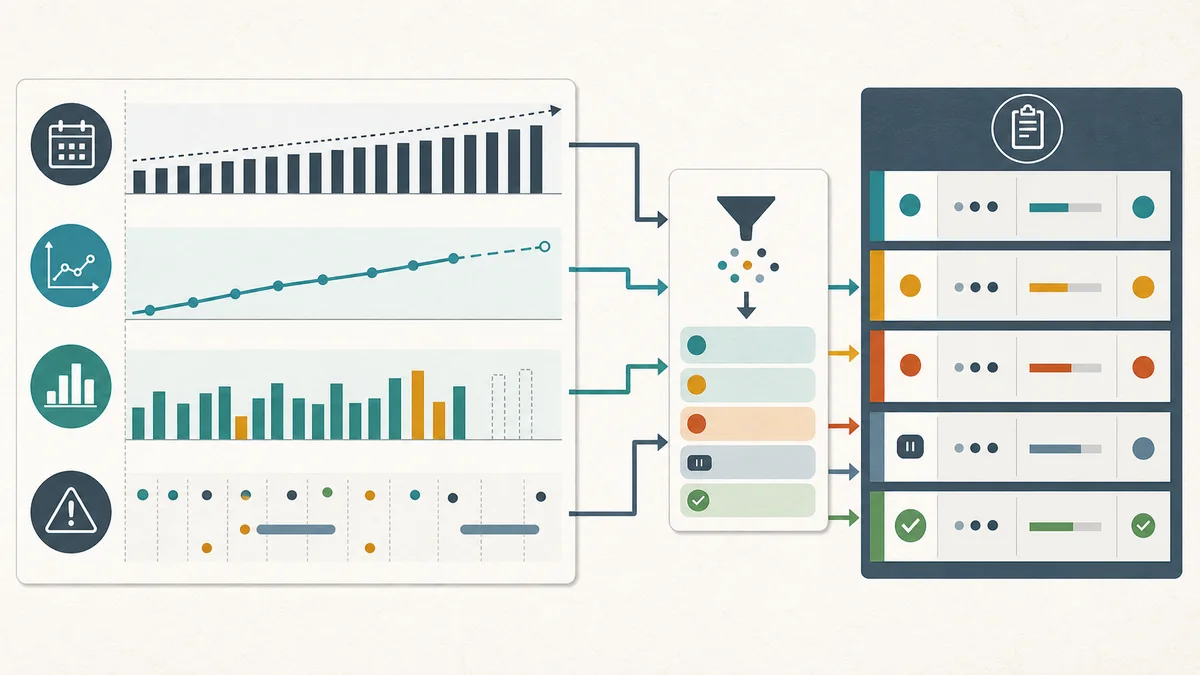
The register should turn delivery evidence into the next buyer-safe action. Do not average the healthiest placement, the delayed creative, and the replacement inventory into one campaign score.
| What the register shows | Likely cause to test | Buyer-safe next action | Final language ceiling |
|---|---|---|---|
| All major placements are within tolerance, with clean field capture and no scope changes. | Normal pacing variation. | Continue monitoring and close as scoped if quality checks hold. | Fulfilled as scoped, with quality and response interpreted separately. |
| One placement is behind, but eligible same-context supply remains available. | Recoverable delivery variance, creative eligibility, or ad-server constraint. | Recover inside the original package and keep a watch row open. | No makegood note if recovery preserves scope and timing. |
| Shortfall cannot recover inside the original placement or date window. | Forecast miss, inventory shortage, page-state change, or buyer pause. | Request buyer approval for a same-context replacement and separate the row in reporting. | Delivered with replacement inventory, not delivered exactly as scoped. |
| Replacement inventory changes page group, placement family, device class, or timing. | Makegood solves delivery but changes interpretability. | Report original and replacement delivery separately, then narrow the renewal claim. | Use delivery-repair language; do not pool response or quality claims. |
| Destination, tracking, or creative issue created missing or misleading response rows. | Operational fault outside media exposure. | Pause, exclude, or label affected windows before final interpretation. | Delivery may be repaired, but response evidence remains limited. |
Pacing states
Pacing language should be operational and modest. A campaign can deliver perfectly and still fail to create qualified response; it can also need a makegood for reasons that say little about the audience or creative.
| State | Use when | Next action | Readout boundary |
|---|---|---|---|
| On pace | Delivery is within the agreed tolerance by package, placement, and device. | Continue monitoring quality fields and outcome status. | On-pace delivery supports contract delivery, not business impact. |
| Slightly behind | Delivery is recoverable within the current flight and eligible inventory remains available. | Watch daily, check creative approval, device mix, and ad-server eligibility. | Do not mention makegood unless recovery fails or the buyer decision depends on timing. |
| Materially behind | The campaign is unlikely to meet booked delivery without a scope, timing, or inventory adjustment. | Name the shortfall reason, owner, buyer notice, and approved repair path. | Final language should separate original package delivery from repaired delivery. |
| Overdelivering | Delivery is running ahead of plan or a placement is concentrating impressions unexpectedly. | Check caps, device mix, placement eligibility, and whether overdelivery changes reader experience. | Extra impressions are not extra value unless quality and context rules still hold. |
| Paused or constrained | Creative, destination, category, tracking, seller-path, or page-state issues limit delivery. | Record the pause window, affected placements, owner, and restart condition. | Exclude or label constrained windows before interpreting response trends. |
Makegood decision rules
A makegood is a delivery repair, not proof that the buyer received the same evidence as the original package. The repair should preserve the reader task, placement quality, device rules, and reporting grain as closely as possible.
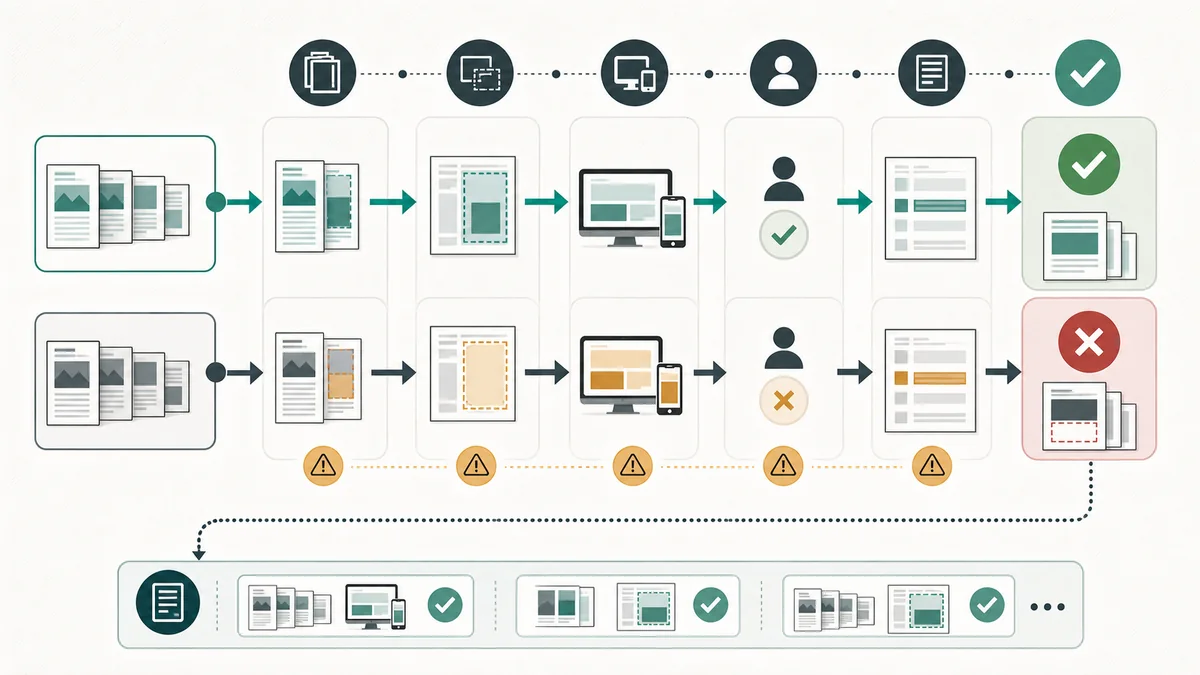
Same context first
Offer replacement inventory inside the same package, page group, placement family, and device class before expanding to adjacent contexts.
Show the substitution
Report original delivery and makegood delivery separately when the replacement changes placement, device, creative size, page group, or date window.
Name the cause
Separate inventory shortage, creative delay, destination outage, tracking issue, buyer pause, seller-path issue, and page-state changes.
Protect reader experience
Do not add intrusive units, excessive refresh, or crowded placements simply to chase a delivery total.
Update the claim limit
If the repair changes context or timing, final language should say delivered with replacement inventory rather than delivered as originally scoped.
Keep approval visible
Record who approved the replacement, when the buyer was notified, and whether the final report should include an exception note.
Register fields
These fields are intentionally plain. They should be easy to copy into an order note, campaign ticket, spreadsheet, or reporting export without changing the meaning.
| Field | What to record | Final-report use |
|---|---|---|
| register_id | Stable row ID for each pacing issue, pause, exception, or makegood. | Lets renewal notes cite the exact operational row. |
| campaign_id | Campaign identifier shared across proposal, trafficking, analytics, invoice, and readout. | Prevents rows from drifting across similar campaign names. |
| package_id | Package ID, deal key, and package reporting key. | Shows whether the issue belongs to the sold package or an added support lane. |
| placement_scope | Placement ID, page group, format, device class, accepted sizes, and refresh rule. | Separates original inventory from replacement or excluded inventory. |
| delivery_state | On pace, slightly behind, materially behind, overdelivering, paused, constrained, repaired, or closed. | Explains why totals changed across dates or placements. |
| delivery_counts | Booked, expected-to-date, delivered, viewable, blocked, shortfall, makegood, and remaining impressions. | Reconciles delivery without hiding quality or eligibility differences. |
| root_cause | Inventory, creative, destination, tracking, buyer pause, seller-path, page-state, forecast, or reporting issue. | Prevents operational causes from being misread as audience response. |
| buyer_notice | Date, channel, contact, decision needed, and approved repair path. | Shows whether the buyer accepted a changed scope or timing. |
| readout_note | Sentence that should appear in the final report if the issue affects interpretation. | Keeps the final narrative aligned with the operational record. |
Weekly review cadence
| Review moment | Check | Decision |
|---|---|---|
| Day 1 | Creative renders in eligible placements, click URL works, package and placement fields appear in reports. | Keep live, fix field, or pause before bad rows accumulate. |
| 25% through flight | Expected delivery by placement and device, early viewability, invalid-traffic flags, and destination errors. | Continue, tune eligibility, notify buyer, or open makegood row. |
| 50% through flight | Shortfall risk, overdelivery concentration, creative fatigue, lead-status capture, and comparison-rule integrity. | Approve recovery path or narrow the final claim boundary. |
| 75% through flight | Remaining eligible supply, replacement inventory quality, buyer notice status, and final readout note. | Close as on pace, execute makegood, or prepare exception language. |
| Closeout | Final delivery, makegood rows, excluded windows, buyer approvals, quality fields, and renewal limits. | Move rows into the package performance readout and renewal scorecard. |
Simulated Worked Example: calculate the repair boundary
This is a Simulated Worked Example, not a campaign result. The figures below are fictional and show how to calculate the gap before a buyer approves a makegood. Replace them with an export that uses the campaign's actual package, placement, device, date, and forecast records.
Assume a package books 50,000 impressions over a 30-day flight. On day 19, the agreed pacing plan says 32,000 impressions should have delivered, but the original scope has delivered 27,200. The remaining eligible original inventory is forecast at 18,000 impressions, and the buyer approves a 4,800-impression makegood in a different placement family.
| Evidence row | Calculation | Result | Bounded decision |
|---|---|---|---|
| Pacing against expected-to-date | 27,200 delivered / 32,000 expected | 85.00% | Open an exception row and test cause; do not call the package complete. |
| Expected-to-date gap | 32,000 expected - 27,200 delivered | 4,800 impressions | Record the gap by placement and device before pooling it. |
| Projected original close | 27,200 delivered + 18,000 forecast original inventory | 45,200 impressions | Projected original shortfall is 4,800 impressions, or 9.60% of the 50,000 booked. |
| Delivery after makegood | 45,200 original + 4,800 approved replacement | 50,000 total, 100.00% of booked quantity | Report as fulfilled with replacement inventory because placement context changed. |
Assumptions and limits: the 18,000-impression forecast is treated as a planning estimate, not a certainty; the example does not model daily variance, render rate, invalid traffic, viewability, frequency, or buyer acceptance timing. It estimates delivery arithmetic only. The conclusion changes if the forecast, package scope, or replacement context changes, and no delivery repair proves audience quality, response, or incremental impact.
Bounded decisionKeep the 45,200 original-scope impressions and the 4,800 makegood impressions in separate report rows. The package can be described as fulfilled with buyer-approved replacement inventory, not fulfilled exactly as scoped.
Makegood approval boundary
A delivery gap is not enough to approve a repair. Use this five-gate handoff so the register distinguishes a forecasted shortfall from a buyer-approved makegood and keeps delivery quality fields out of an unsupported performance claim. Every gate must pass; this is a control sequence, not a campaign score.
| Gate | Evidence to attach | Pass condition | If it fails |
|---|---|---|---|
| 1. Scope is fixed | Booked quantity, date window, package, placement family, device rules, and reporting grain. | The original delivery row can be reconciled without pooling unlike placements or windows. | Hold the proposal and repair the field dictionary first. |
| 2. Cause is tested | Forecast result plus the ad-server health history and non-delivery causes for the affected line item. | The register names a plausible operational cause and its owner; behind alone is not a diagnosis. | Keep the exception open; do not promise that more inventory will solve it. |
| 3. Replacement is bounded | Replacement placement, page group, device, creative size, dates, and expected reporting label. | The replacement stays in the original context or the changed context is explicitly reported as a separate row. | Narrow the claim and obtain approval for the changed scope. |
| 4. Approval is recorded | Buyer notice, decision owner, acceptance date, contracted quantity, and approved delivery window. | The repair is accepted rather than merely proposed, and its quantity does not exceed the documented gap. | Label it proposed; it is not yet fulfilled delivery. |
| 5. Quality fields stay separate | Served, rendered, viewable, unfilled, blocked, and response-status fields with their denominators. | Delivery totals do not silently include unfilled requests or turn a repaired impression into response or lift evidence. | Exclude or label the affected rows before writing the readout. |
Reproduction note: copy the five gate rows into the register, attach the forecast and troubleshooting exports, and mark each gate pass, hold, or not applicable. Re-run the checks after any change to targeting, creative, placement, device, or dates. A completed makegood repairs a delivery obligation; it does not establish audience quality, response, or incremental impact.
Primary source trail for pacing and makegoods
This register follows first-party operational guidance rather than treating a dashboard percentage as a diagnosis. Google Ad Manager's underdelivery forecasting guidance says to run a forecast before changing targeting or date settings when a line item may miss its goal. Its delivery troubleshooting guidance points operators to health history and non-delivery causes, which is why this register records recent changes, eligible requests, and the cause owner. For an approved repair, Google's makegood guidance says the publisher controls whether to offer the makegood and that the replacement can be reported separately. Google's unfilled-impressions guidance also distinguishes an unfilled request from a served impression, so blank or ineligible inventory should not silently become delivered quantity.
Source boundary: Ad Manager's forecast and troubleshooting tools describe delivery eligibility and operational causes, while a makegood repairs a contracted delivery obligation. They do not establish audience quality, response, or lift; preserve the original and replacement rows separately whenever placement, device, timing, or inventory context changes.
Example register rows
The examples below show the level of specificity needed. They are not performance benchmarks.
| Register ID | State | Issue | Owner | Buyer note | Readout note |
|---|---|---|---|---|---|
| pace-01 | Slightly behind | Mobile inline delivery is 9% behind expected-to-date because one creative size was not approved for two mobile placements. | Ad operations | No buyer notice yet; recoverable after backup creative approval. | No exception if recovered by the next weekly check. |
| pace-02 | Materially behind | Desktop rail is 31% behind because eligible guide pages underdelivered against forecast. | Sales and ad operations | Buyer approved same-package article-inline makegood for the final week. | Report rail delivery and inline makegood separately; do not pool placement response. |
| pace-03 | Paused | Destination form stopped capturing source fields for one business day. | Buyer destination owner | Buyer notified; paid traffic paused until source fields were restored. | Exclude the pause window from lead-quality interpretation or label affected rows. |
Safe final language
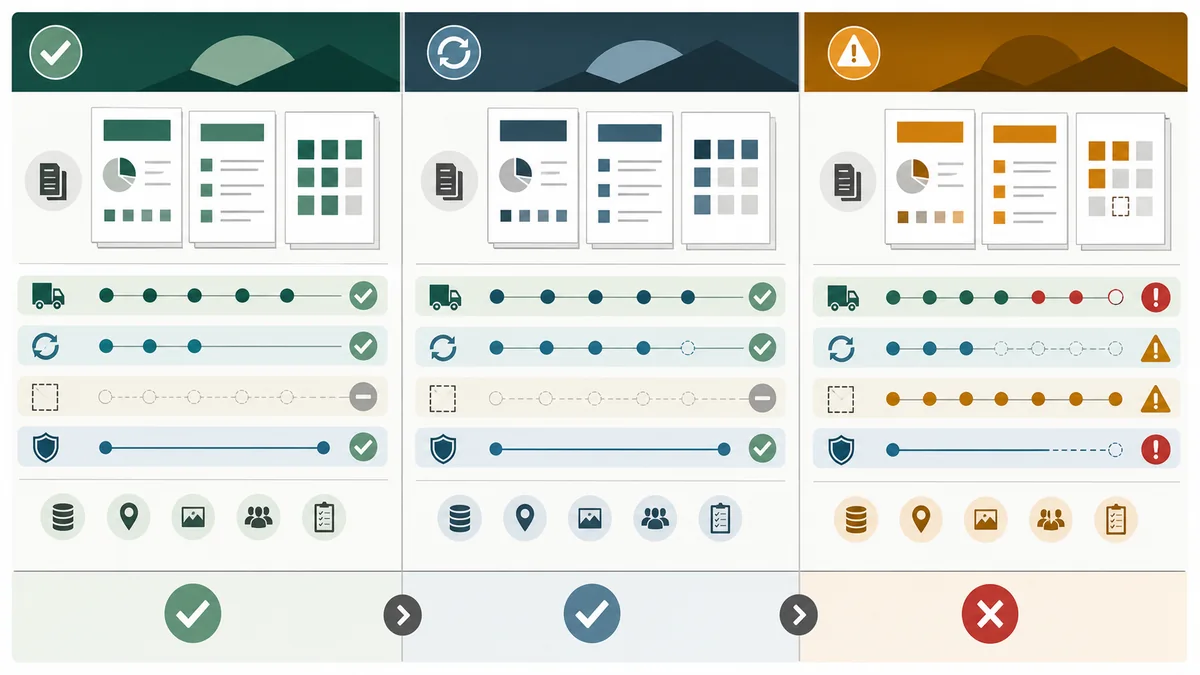
Fulfilled as scopedThe campaign delivered within the approved package, placement, device, and date boundaries. Delivery quality and response should still be interpreted separately from causal lift.
Fulfilled with replacement inventoryThe campaign reached the delivery goal after buyer-approved replacement inventory. The final report should separate original and makegood rows when context, placement, device, or timing changed.
Under-delivered with visible causeThe campaign did not meet the booked delivery target. The report should state the operational cause, excluded windows, buyer notice, and whether renewal evidence is still usable.
Pair with
Use this register after the campaign readiness dashboard, private marketplace deal review checklist, and creative asset acceptance checklist. Use it with the ad yield and deal-readiness checklist for supply and floor decisions, the private marketplace reporting field dictionary for export fields, the package performance readout for final buyer language, the campaign issue log and renewal register for unresolved weak lanes, and the campaign renewal evidence archive before a follow-up flight inherits the same assumptions.